3D printers are revolutionizing technical education with their ability to transform theoretical ideas into practical experiences. Since their introduction, these technologies have had a significant impact on the way students learn and educators teach. In this article, we will explore in detail the impact of 3D printers on technical education, from their origin to future trends, as well as their influence on the educational and professional sphere.
Introduction
The rapid evolution and technological advances have promoted the emergence of 3D printers as a fundamental tool in the educational environment. Throughout this article, we will examine how these printers have transformed technical education and how they are shaping the future of vocational training. From the impact on the creativity of students to the preparation for future careers, 3D printers play a crucial role in the revolution of technical teaching.
History and background
The 3D printers, initially known as fast prototyping machines, had their beginnings in the 1980s, however, it was not until the first decade of the 21st century that their impact within the educational field began to be relevant. These machines, able to materialize three-dimensional objects from digital models, have become an essential tool for the development of technical skills. Technological evolution has allowed 3D printers to become costly and exclusively used devices in the industry, to be accessible and applicable in educational contexts.
In-depth analysis
The impact of 3D printers on technical education is manifested in various areas. From the creation of prototypes and construction projects, to the development of problem design and resolution skills, these printers have expanded the educational approach to the practical implementation of theoretical concepts. In addition, the advantages of 3D printing in terms of customization and low costs make it an invaluable tool for students and educators in technical education.
3D printers also offer a new approach to teaching disciplines such as engineering, architecture and environmental sciences, where students can directly apply their theoretical knowledge. This practical approach not only improves understanding of concepts, but also fosters creativity and innovation in problem solving.
Comprehensive review
3D printer applications in technical education go beyond the creation of physical models. Students can be involved in real projects, develop collaborative skills and experiment with different raw materials, which gives them a comprehensive understanding of manufacturing processes. In addition, the ability to simulate complex designs provides a practical perspective on technical training and promotes critical thinking and problem solving.
However, it is important to recognize that 3D printers also pose challenges, such as the need to keep up with rapid technological developments, as well as cost and resource management. These aspects should be considered as part of the effective implementation of 3D technology in educational settings.
Comparative analysis
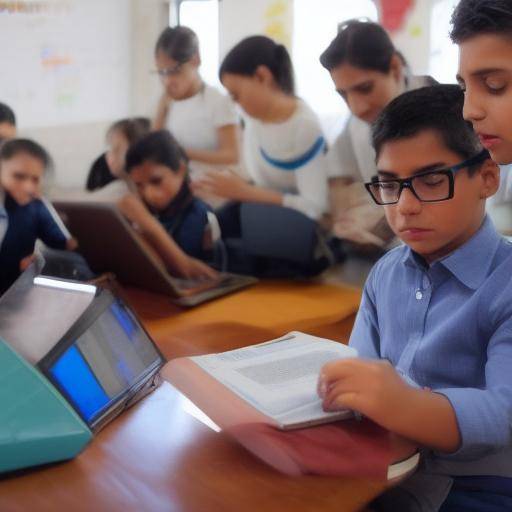
The integration of 3D printers into technical education has proved to be a significant step forward in how practical skills and creativity are addressed in the classroom. Compared to traditional methods, 3D printers offer a unique learning experience that prepares students for the professional world while promoting innovation and problem solving.
Practical advice and recommendations
- Involve students into multidisciplinary projects that explore the capabilities of 3D printers.
- Promote experimentation and creativity in the design and manufacture of prototypes.
- Establish collaboration agreements with industry so that students can work on real projects using 3D printers.
Industry perspectives and expert opinions
According to industry experts, the integration of 3D printers into technical education represents a significant change in the way in which practical skills and expertise are acquired. The adoption of these technologies is contributing to the formation of a new generation of highly trained professionals, with advanced design and manufacturing capabilities.
Advances in 3D printing are transforming manufacturing and technical education is playing a key role in preparing young people for the challenges and opportunities of a constantly evolving labour market. It is vital that educational programs continue to adapt to emerging trends to ensure that students acquire the skills necessary to succeed in the industries of the future.
Case studies and practical applications
The impact of 3D printers on technical education is evidenced through case studies that illustrate the successful application of these technologies in educational settings. From the creation of product prototypes to the manufacture of custom parts, 3D printers have proven to be versatile tools that enrich technical teaching.
In addition, 3D printers have proven to be an effective platform for collaboration between students and teachers, promoting innovation and exchange of ideas. These practical cases show that the integration of 3D printing into technical education has a significant impact on the formation of technical skills and the preparation for the working world.
Future trends and predictions
The future of 3D printers in technical education is a constantly evolving landscape. The adoption of these technologies is expected to continue to grow, providing opportunities for the exploration of new materials and applications. 3D printers are also expected to play an increasingly important role in promoting innovation and creativity in technical education.
With the emergence of additive manufacturing and large-scale 3D printing, students will be exposed to more realistic scenarios that reflect labour market demands. Technical training will continue to evolve to incorporate these trends, preparing students for careers that require a multidisciplinary approach and an innovative mentality.
Conclusions
The impact of 3D printers on technical education is undeniable, offering significant opportunities for innovation, collaboration and the development of practical skills. Since their introduction, these technologies have transformed the way students learn and how they prepare for future careers. The effective integration of 3D printers into technical education is a crucial step towards the formation of a highly trained and adaptable workforce to the challenges of the digital era.
FAQs
How can 3D printers benefit technical education?
3D printers allow students to translate theoretical concepts into practical projects, fostering creativity and problem solving. In addition, they prepare students for working environments using advanced manufacturing technologies.
What are the challenges of integrating 3D printers into technical education?
Some challenges include the need for teacher training, access to appropriate technology and materials, as well as cost and resource management.
How can educators make the most of 3D printers in the classroom?
Educators can design collaborative projects that challenge students to use 3D printing to find solutions to real problems, fostering experimentation and creativity.
What role do 3D printers play in preparing students for the job market? 3D printers provide students with the opportunity to acquire advanced design and manufacturing skills, which are increasingly demanded in the industry.
In which fields of technical education can 3D printers be applied?
3D printers have applications in a wide range of fields, including engineering, architecture, industrial design, health science and manufacturing, among others.
How can 3D printers foster interdisciplinary technical education?
By allowing students to collaborate on projects involving design, manufacturing and problem solving, 3D printers foster the integration of knowledge from various disciplines.
What are some considerations when selecting a 3D printer for educational environments?
It is important to consider ease of use, availability of resources and materials, as well as the ability of the printer to support various educational projects.
In summary
3D printers have transformed technical education by offering an innovative way of teaching and learning. From experimentation to collaboration and career preparation, these technologies have broadened the limits of technical education. As technology continues to evolve, it is crucial that educators and students make the most of the opportunities offered by 3D printers to prepare the next generation of trained and ready-to-face professionals to meet the challenges of the modern working world.
The effective integration of 3D printers in technical education not only enriches educational experience, but also promotes innovation and creativity, laying the foundations for a future in which the limits between theory and practice are blurred, preparing students to be leaders in the forefront of technology and manufacturing.
As always, technical education remains a constantly evolving field, and the integration of 3D printers marks a significant milestone on the road to more dynamic, practical and adapted training to the era of digital manufacturing.