Introduction
Currently, the use of simulations as a tool for the development of problem solving skills has gained particular relevance. Find out how these simulations impact positively on the development of problem solving skills and their essential role in various fields!
History and background
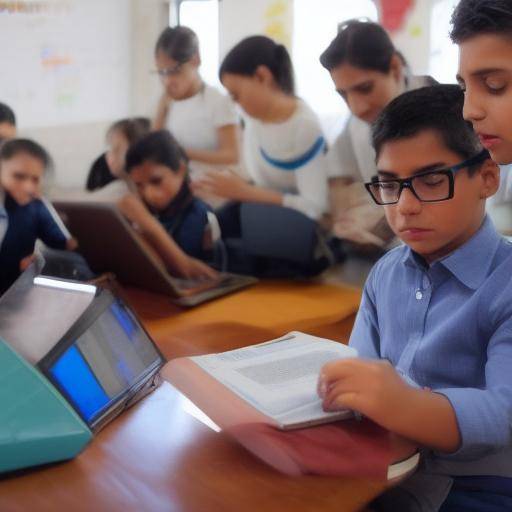
Simulations, conceived as interactive representations of real situations, have existed throughout history. From the first primitive forms in the pre-technological era to the current advanced simulations, its evolution has been impressive. It even goes back to military strategies and the formation of pilots during World War II. In the educational field, simulations have revolutionized the way students learn, allowing them to experience and solve problems in a practical way.
In recent years, the exponential growth of technology has led to the creation of increasingly realistic and accurate simulations, increasing its usefulness and applicability in various fields, including medicine, engineering, business management and more.
In-depth analysis
Simulations have proven to be an invaluable tool for developing troubleshooting skills. According to studies, the use of simulations in educational and business environments has resulted in a significant increase in understanding and capacity to address and solve complex problems. These tools allow users to face practical situations, which helps them develop critical thinking, effective decision-making and problem solving proactively.
Full review
The impact of simulations on problem solving skills development extends to a variety of applications. From the simulation of medical scenarios that allow students to practice surgical procedures, to business management simulations that help leaders make strategic decisions, the possibilities are vast. Its influence transcends the borders of education and industry, impacting on professional training, personal development and technological innovation.
Comparative analysis
By comparing the impact of simulations with other learning methodologies, your distinction is clearly observed. Unlike traditional teachings, simulations submerge participants in realistic environments, providing a practical experience that transcends theory and fosters meaningful learning. This distinction is reflected in the development of problem-solving skills, where simulations offer a dynamic and participatory approach that drives critical thinking and creativity.
Practical advice and useful advice
When simulations are implemented for problem solving skills development, it is essential to provide a clear framework and complementary resources. Establish clear objectives, encourage participation and provide constructive feedback are key elements to maximize the impact of simulations. In addition, integrating technology effectively and fostering collaboration among participants can significantly enhance results.
Industry perspectives and expert opinions
The consensus among experts is clear: simulations are an invaluable tool for the development of problem solving skills in educational and labour environments. Technological advances continue to expand possibilities, opening new borders for the application of simulations in diverse disciplines. It is crucial that professionals be familiar with these tools and recognize their potential to train, innovate and overcome challenges in a constantly changing world.
Case studies and applications in real life
Case studies on simulations in practice reveal how these tools have transformed learning and problem solving. From management simulations that allow leaders to simulate business scenarios to medical simulations that prepare health professionals for critical situations, the benefits are undeniable. By providing a platform to experience, make mistakes and learn from them without serious consequences, simulations have proven to be an effective way to acquire and improve troubleshooting skills in safe and controlled environments.
Future trends and predictions
As technology continues to advance, simulations are expected to continue to evolve and expand into new areas. Virtual and increased reality is gaining ground in creating more immersive and realistic simulated experiences. In addition, simulations are expected to be further integrated in the educational and business sphere, adapting to the changing needs of society and offering innovative solutions for the development of problem-solving skills.
Conclusion
The impact of simulations on problem solving skills development is undeniable. From its historical evolution to its current application, simulations have proven to be a powerful tool to promote practical, effective and meaningful learning. With benefits that transcend the boundaries of education and industry, their essential role in strengthening vital skills is unquestionable. As technology advances and new applications are discovered, the potential of simulations to shape the future of learning and problem solving is unlimited.
Frequently asked questions
1. How do simulations influence problem solving skills development?
Simulations influence the development of problem-solving skills by providing a practical and realistic environment where participants can apply their knowledge, experience challenging situations and receive constructive feedback.
2. What is the difference between simulations and other learning methods?
Unlike traditional learning methods, simulations allow participants to immerse themselves in realistic scenarios, fostering experiential learning and deep development of problem solving skills.
3. Are simulations applicable in all professional areas?
Yes, simulations can be adapted to a wide range of professional fields, including medicine, business, engineering, public services and more. Their versatility makes them relevant in various industries.
4. What concrete benefits do simulations bring to the development of problem solving skills?
Specific benefits include improved decision-making, the practice of real situations, the promotion of critical thinking and risk reduction in working environments.
5. What are the emerging trends related to simulations and problem solving skills development?
Emerging trends include greater integration of virtual and increased reality, as well as customization of simulations to adapt to the specific needs of each individual or sector.
6. How can organizations effectively implement simulations for problem resolution skills development?
Organizations can implement simulations effectively by setting clear goals, offering constructive feedback, encouraging active participation and adapting simulations to the situations and challenges they face in their working environment.
Now that you know the impact of simulations on problem solving skills development, you are prepared to explore new opportunities and apply this valuable tool on your path to growth and success!
Remember that the adoption of simulations as a learning and professional development methodology can make the difference in the way we face the challenges of the current world. Take a dive into the simulation world and discover everything they can offer to boost your troubleshooting skills!