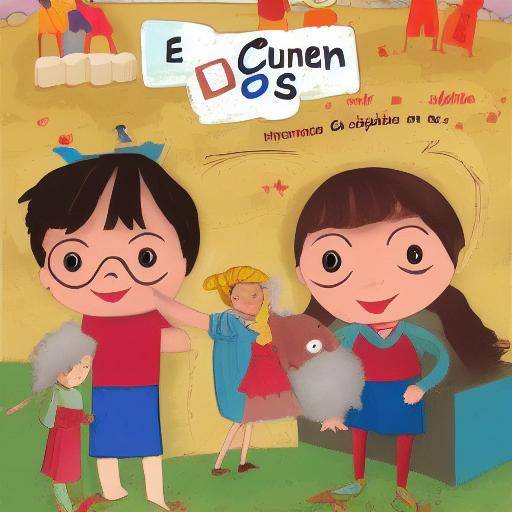
Storytelling has been a powerful tool in teaching since time immemorial. The ability to convey knowledge through amazing stories has been appreciated in all cultures and has proven to be an effective strategy for education. In this article, we will explore the art of teaching through storytelling, analyzing its historical past, its benefits, challenges, practical applications, and its future in the field of education. In addition, we will discover innovative strategies that can enhance the effectiveness of this powerful pedagogical tool.
Introduction
Teaching through storytelling, also known as storytelling, is much more than just telling stories. It is a didactic technique that combines creativity, empathy, and the power of narrative to convey information, values, and knowledge in a memorable and meaningful way. In an increasingly digital world, storytelling has become an essential tool to keep students’ attention and foster deep learning.
History and Background
Origins and Evolution
The practice of teaching through narratives has its roots in the oral traditions of ancient cultures. From the homerical epopeyas to the teachings transmitted by the shamans of the indigenous tribes, the storytelling has been the primary means of educating, entertaining, and preserving knowledge throughout the history of humanity. In ancient Greece, for example, mythological accounts not only entertained their listeners, but also conveyed moral teachings and life lessons.
Significant issues
Historically, the oral transmission of knowledge evolved over time, adapting to media such as theatre, poetry, literature and, more recently, modern media. Throughout history, great educators, philosophers and writers have used storytelling as an effective means of teaching. From Socrates and Plato to the classic tales of Andersen and the modern digital media, the narrative has always played a crucial role in education.
Deep analysis
Benefits of Narration of Stories in Teaching
Storytelling as a pedagogical tool offers a number of significant benefits. A well-developed story can awaken the interest of students, foster empathy, and facilitate a deeper understanding of concepts. Furthermore, stories can help contextualize information, promote critical thinking, and improve knowledge retention. By emotionally connecting with listeners, stories can influence students' attitudes and behaviors, fostering more meaningful and lasting learning.
Challenges and Considerations
Despite its many benefits, the storytelling in the educational field also presents challenges. The selection of appropriate stories, adaptation to different audiences, and effective integration with curriculum contents are aspects that should be carefully considered. In addition, the evaluation of results and the measurement of the impact of storytelling on learning pose additional challenges for educators. Overcoming these challenges requires a deep understanding of narrative techniques, as well as careful planning and continuous evaluation.
Current trends
In the current context, storytelling has merged with digital technology, leading to new ways of telling and experiencing stories through interactive media, virtual reality, and multimedia. These innovations have not only expanded creative possibilities, but also opened new opportunities for education based on storytelling. The integration of narrative into virtual environments and online educational platforms has expanded the scope of teaching through stories, allowing educators to reach a more diverse and global audience. In addition, the boom in social media and digital media has created new platforms for sharing and contextualizing stories, which in turn has significantly impacted the way in which the modern era is taught and learned.
Comprehensive review
Practices and Best Practices
Storytelling has become a valuable tool in a variety of educational contexts. From teaching academic subjects to transmitting social values and skills, stories can be used effectively to enrich any curriculum. Successful strategies often include the selection of relevant stories, the active participation of students, and integration with practical activities to improve understanding and knowledge retention.
Perspectives of Experts and Future Innovation
Educational experts have recognized the transformative power of storytelling in teaching. Many defend their deeper integration into the curricula as a way of addressing contemporary educational challenges and improving the learning experience of students. Future innovation in this field can include the combination of emerging technologies, such as artificial intelligence and increased reality, to create more immersive and personalized storytelling experiences.
Comparative analysis
By comparing storytelling to other educational methodologies, it is clear that this technique offers unique benefits. Unlike traditional master classes, storytelling promotes the active participation of students, fosters creativity, and stimulates multiple dimensions of learning, including intellectuals, emotional, and social.
Practical Tips and Accessible Tips
Effective Strategies for Teaching through Stories
By incorporating storytelling into teaching, educators can benefit from effective strategies such as the contextualization of curriculum content, the creation of memorable characters, the structuring of stories with convincing narrative arches, and the incorporation of visual and auditory elements to enrich the learning experience. In addition, the adaptation of stories to different learning styles and the exploration of topics relevant to students can significantly improve the effectiveness of this technique.
Integration ideas and Practical Recommendations
Key Tips for Effective Narration
- Set emotional connections: Use emotional elements to involve students and make history memorable.
- Encourage active participation: Involve students in storytelling through interactive activities and discussions.
- Link stories with curriculum content: Select relevant and related stories to study topics to strengthen understanding and knowledge retention.
Industry Perspectives and Expert Reviews
Insignts and Future Trends
The leaders of the educational industry are increasingly convinced of the importance of storytelling in the teaching-learning process. According to them, the narrative will continue to play a central role in the development of critical thinking skills, empathy, and communication in the twenty-first century. The continuous integration of technology in storytelling, together with an approach to inclusiveness and diversity, is expected to be a relevant trend in the near future.
Case Studies and Practical Applications in Real Life
Examples of Success and Lessons Learned
Several case studies show how storytelling has been successfully implemented in diverse educational environments. From formal academic programs to non-formal learning initiatives, stories have demonstrated their ability to improve motivation, understanding and knowledge retention. For example, programs that integrate local cultural narratives into the curriculum have succeeded in increasing student participation and commitment, as well as promoting a sense of identity and self-esteem.
Future Trends and Predictions
Emerging Outlook and Potential Challenges
As digital education advances and new technologies develop, storytelling will continue to evolve. The immersive narrative, data-based narrative and customization are expected to become focus areas for educators and content creators. However, the challenge is to adapt these innovations ethically and effectively to ensure that the transformative power of stories remains accessible and meaningful for all students.
Conclusion
Storytelling is much more than a technique to entertain or fill time. It is a powerful educational tool that can transform the way students learn and understand the world around them. By taking advantage of the narrative strategically and effectively, educators can significantly enrich the learning experience, promote empathy and intercultural understanding, and prepare students to face the challenges of the twenty-first century.
Frequently asked questions
How can an educator incorporate storytelling into a virtual learning environment?
In a virtual learning environment, educators can incorporate storytelling through the creation of narrative videos, interactive narratives, and immersive simulations. In addition, they can encourage student participation through online discussions and creative writing activities based on narrative.
What are the benefits of teaching through storytelling for students of different ages?
Storytelling has benefits for students of all ages. It helps develop readership skills, promotes critical thinking, and promotes intercultural empathy and understanding. In addition, it can increase the motivation and commitment of students, regardless of their age.
Can storytelling be used in teaching scientific and technical subjects?
Absolutely. Storytelling can be an effective tool to teach scientific and technical concepts in an accessible and meaningful way. By linking abstract concepts with concrete narratives, educators can facilitate understanding and retention of knowledge in these disciplines.
What is the role of technology in the evolution of storytelling in education?
Technology has opened new possibilities for storytelling, allowing the creation of immersive and personalized experiences. From virtual reality to social media platforms, technology has expanded the scope and effectiveness of narrative in the educational field.
How do educators evaluate the impact of storytelling on student learning?
The evaluation of the impact of storytelling on student learning can involve observation of participation, retention of knowledge, creative expression, and change in student attitudes. In addition, educators can collect comments, reflections, and student works that reflect the impact of the narrative on the learning process.
What are some strategies to select appropriate stories to teach in the classroom?
By selecting stories to teach in the classroom, educators can consider the relevance of history for learning goals, the diversity of perspectives represented in history, and the level of interest and understanding that history can generate in students. In addition, it is important to consider the adaptability of history to the individual needs of students.