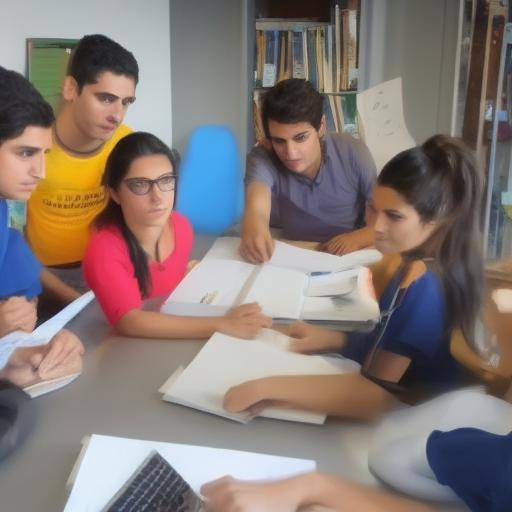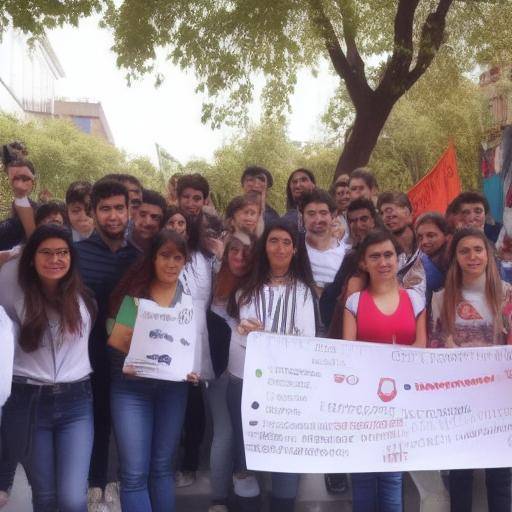
Leadership is a crucial skill in anyone's life, and fostering this aspect in students can make a big difference in their personal and professional development. In this article, we will explore effective strategies to promote leadership in students, examining their importance, challenges, and providing practical advice to achieve this goal successfully.
Introduction
Leadership is not limited to a position of authority; it is more about the ability to inspire, motivate, and guide others towards achieving common goals. Promoting leadership in students is fundamental, as it provides them with skills that will be valuable throughout their lives, regardless of their area of interest or career. In this article, we will explore its foundations, benefits and strategies to develop leadership in educational settings.
History and Background
The concept of leadership has evolved throughout history, influenced by various events and personalities. From the first models of leadership in ancient civilizations to charismatic and situational leadership today, the development of this skill has been multifaceted. Understanding the historical theories and approaches of leadership gives us a deep perspective on its importance and application in the student context.
A crucial milestone in the study of leadership was the emergence of trait theory in the first half of the 20th century, which identified individual characteristics associated with effective leadership. As we advance in time, behavioral, situational and transformational theories have broadened our understanding of leadership, adapting to changing social and organizational dynamics. These historical backgrounds lay the foundation for addressing leadership in the context of education.
Deep analysis
Leadership in students carries many benefits, including the development of communication skills, teamwork, decision-making and critical thinking. However, their promotion also faces unique challenges, such as resistance to change, diversity of leadership styles, and the need to adapt to diverse educational environments. Understanding these challenges is essential to implementing effective strategies.
Statistics show that the development of leadership in students is directly related to better academic performance, greater satisfaction in the educational environment, and greater self-esteem. This analysis reveals the importance of integrating leadership programmes into the school curriculum and promoting a holistic approach to student development.
Exhaustive examination
The promotion of student leadership is realized through various practices, such as extracurricular programs, mentoring, collaborative projects and direct leadership experiences. The identification of best practices, the analysis of success stories and the evaluation of innovative methodologies gives us an integral vision of how to nurture leadership in educational settings.
Key approaches to promoting student leadership include promoting self-confidence, developing communication skills, promoting empathy, and facilitating opportunities for decision-making. These strategies have a significant impact on the empowerment of students to assume leadership roles, both within and outside the school arena.
Comparative analysis
Leadership, students and their promotion are intrinsically interconnected. Leadership is not limited to authority, but is manifested in the ability to positively influence others. Applying specific strategies to promote leadership in students carries distinctive implications compared to other environments, such as the professional. Identifying these similarities and differences provides us with valuable knowledge to adapt leadership strategies to the unique needs and characteristics of students.
Tips and Suggested Actions
Promoting student leadership benefits from practical advice and concrete actions. Establish clear goals, provide constructive feedback, and facilitate opportunities to lead projects are just some of the effective strategies. These practical actions help to cultivate leadership in students and enable them to develop transferable skills that will be fundamental in their personal and professional future.
- Establish an environment that promotes active participation and leadership skills development.
- Provide opportunities for students to lead projects or initiatives in the school environment.
- Offer extracurricular programs focused on developing leadership skills and teamwork.
- Implement rotary leadership roles for students to gain experience in different contexts.
Industry Perspectives and Expert Reviews
Gathering the perspectives of educational leaders and experts in the field of student development offers a comprehensive and valuable insight into the promotion of student leadership. These perspectives and opinions provide practical and theoretical knowledge that enrich our understanding and enable us to identify emerging trends and innovative strategies.
Education experts emphasize the importance of developing a school culture that promotes leadership, recognizing and assessing the various ways in which students can exercise leadership in their environment. The need to adapt to emerging technologies and social dynamics also stand out as key factors in the effective promotion of student leadership.
Case Studies and Real Life Applications
Case studies and practical applications offer a concrete perspective on how successful implementation of leadership development strategies directly impacts student life. These examples reveal the challenges faced, the effective methods employed and the results achieved, providing key lessons for those seeking to develop robust and effective leadership programmes.
An exceptional case study is that of a school that implemented a mentor program where senior students guided new students, developing leadership skills and empathy. This example shows how peer mentoring can be a powerful tool for fostering student leadership, while strengthening cohesion and community sense in school.
Future Trends and Predictions
Future trends and predictions allow us to anticipate the changes and challenges that will face the promotion of student leadership. The integration of innovative technologies, adaptation to hybrid learning environments, and the promotion of diversity and inclusion emerge as critical aspects in the future development of student leadership.
Researchers predict that leadership development will conform to the ongoing demands of a constantly evolving world, where resilience, adaptability and innovation will be outstanding skills. In addition, the approach to ethical and sustainable leadership is expected to materialize in programmes and practices aimed at a positive impact on society and the environment.
Conclusions
Promoting leadership in students is an investment in the future. For centuries, leadership has been an engine of progress and change, and by empowering this skill in students, we give them the tools to face the challenges facing the world. By integrating effective strategies, recognizing the unique needs of students and keeping abreast of emerging trends, we can shape a generation of leaders prepared to create a positive impact on the world.
FAQs
1. What skills are considered fundamental to foster leadership in students?
Leadership-building in students focuses on skills such as effective communication, problem solving, decision-making, empathy and team-building.
2. What impact does student leadership have on the school community?
Student leadership strengthens the school community by fostering a sense of responsibility, empathy and collaboration among students, which contributes to a more positive and stimulating school environment.
3. What is the role of teachers in promoting student leadership?
Teachers play a crucial role in modeling leadership behaviors, providing guidance and mentoring, and creating environments that promote student leadership skills development.
4. What strategies can be used to promote leadership in in introverted students?
For introverted students, it is important to offer safe spaces and adapted programs that give them the opportunity to exercise leadership in a more quiet and reflective way.
5. How can we assess the impact of leadership development on students?
The evaluation of the impact of leadership development on students can be carried out through observation, feedback from the students themselves, and monitoring their participation and achievements in leadership-related activities.
6. How to adapt leadership-building strategies in educational settings with limited resources?
In environments with limited resources, it is crucial to identify creative strategies adapted to the specific needs of students, making the most of available resources, such as human capital and community associations.
Conclusion With the implementation of effective strategies and the continued commitment of both educators and the school community, the promotion of leadership in students becomes an invaluable resource for the strengthening of social fabric, the preparation for future challenges and the creation of a generation of trained individuals to lead and make a positive difference in the world.