
Early education is a crucial stage in the development of children, and problem solving plays a key role in their training. In this article, we will explore in depth the impact of problem solving on early education, analyzing its importance, benefits, challenges, practical applications, and future trends. We will discover how this skill contributes to the integral development of children, as well as to their preparation to face the challenges ahead.
Introduction
Problem solving is a fundamental cognitive skill that plays a crucial role in the intellectual and emotional development of children. In the context of early education, this skill not only allows children to overcome obstacles and challenges, but also promotes self-confidence, creativity, critical thinking, and the ability to work as a team. In this article, we will explore how problem solving impacts early education in multiple dimensions, and how their effective teaching and application can lay the foundation for a successful academic and professional future.
History and Background
The importance of solving problems in early education dates back decades, when educators and psychologists began to understand their influence on the development of the individual. In the 1920s, the pioneers of educational psychology, such as John Dewey, Jean Piaget, and Lev Vygotsky, raised the importance of promoting problem solving in the educational process of children. Their theories laid the foundation for the inclusion of problem solving as a fundamental skill in early education programmes.
Over the years, thorough research has been conducted to support the importance of teaching this skill from the early stages of life. Longitudinal studies have shown that children who acquire strong problem solving skills in early education have higher academic performance, better social adaptation, and greater capacity to face challenges in adult life.
Analysis in Deep
The resolution of problems in early education not only promotes the cognitive development of children, but also influences their emotional and social well-being. Children who are competent in this area tend to be more persevering, proactive, and able to manage stressful situations. In addition, problem solving fosters creativity and critical thinking, essential skills for solving challenges in an increasingly complex world.
However, effective teaching of problem solving in early education also faces challenges. In many educational environments, the pressure to meet academic standards can relieve this ability to a background. Educators and parents often focus on achieving quantifiable results, neglecting the development of soft skills, such as problem solving. It is essential to overcome this gap and to recognize that the comprehensive development of children goes beyond academic qualifications.
Comprehensive review
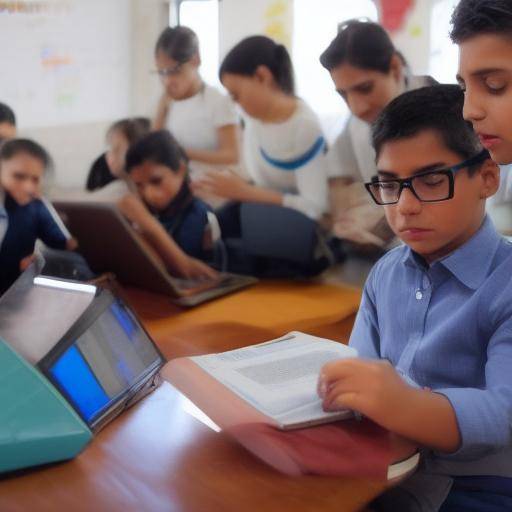
The practical implementation of problem solving in early education is essential for its effectiveness. Learning environments should foster exploration, discovery, and experimentation, providing children with opportunities to face real challenges and find creative solutions. Educators play a crucial role in presenting scenarios that require the use of problem solving skills, and in providing support and guidance while children navigate these challenges.
An exhaustive comparison of various approaches and methods to teach problem solving in early education reveals the diversity of effective strategies that can be adapted to the individual needs of children. From the exploratory method to the cognitive approach, each approach offers unique benefits that contribute to the holistic development of children. Collaboration with parents and caregivers is also crucial, as the incorporation of problem solving in the family environment contributes significantly to the growth of children in this regard.
Comparative analysis
By comparing the impact of problem solving on early education with other educational skills, it highlights its fundamental role in the integral development of children. While the acquisition of knowledge and enhancement of specific skills are important, the ability to face challenges and solve problems creatively and effectively provides children with an invaluable advantage in their path to academic and personal success.
Problem solving shares similarities with education in values, as it promotes ethical thinking and informed decision-making. It also differentiates itself from other skills in its approach in the active resolution of problematic situations, which makes it a practical and applicable skill in various contexts of everyday life.
Practical Tips and Accessible Recommendations
To effectively promote problem solving in early education, educators and parents can implement practical strategies that strengthen this ability. Some recommendations include:
- Providing gaming and learning environments that present significant challenges.
- Promote experimentation and discovery through practical activities and research projects.
- Teach problem solving strategies, such as breaking down a problem in smaller steps, finding alternatives and evaluating solutions.
- Supporting divergent thinking, encouraging children to explore multiple approaches to solving a problem.
The integration of problem solving in everyday situations and the promotion of a positive approach to challenges will enhance the development of this skill in children.
Industry Perspectives and Expert Reviews
Education experts recognize the significant impact of problem solving on early education. Innovative educational programs and research initiatives are focused on identifying effective approaches to cultivating this skill from an early age, recognizing its lasting influence on the development of individuals.
According to Professor Maria Rodriguez, an educational psychology expert, "The problem solving not only increases the cognitive capacity of children, but also provides them with the tools necessary to meet the challenges efficiently, thus developing a resilient mentality that will be invaluable to them in their academic and professional future."
Case Studies and Practical Applications
Examples of successful applications of problem solving in early education abound in educational settings that prioritize the integral development of children. In a primary school with a pedagogical approach focused on problem solving, children participate in interdisciplinary projects that require research, analysis and synthesis skills to find solutions to real world problems. This approach has proven to boost the commitment, creativity, and academic performance of students.
Future Trends and Predictions
As the world becomes increasingly complex and dynamic, problem solving is positioned as a fundamental skill to cultivate in early education. Future trends aim at integrating problem solving into interdisciplinary educational programmes, as well as the development of digital resources and tools that support practical learning and collaborative resolution of problems among children.
In a global context, problem solving is also gaining relevance as an essential skill for the preparation of children for the demands of the future labour market, which will value adaptation capacity, creativity, and innovation.
Conclusions
Problem solving has a significant impact on early education, nurturing the potential of children to effectively address challenges and promoting their comprehensive development. By fostering this skill from an early age, they are given the necessary tools to thrive in a constantly changing world.
The effective teaching of problem solving in early education not only benefits children at their formative stage, but also moulds their future, preparing them to face current and future challenges with confidence and determination.
Frequently asked questions
1. Why is it important to encourage problems in early education?
Problem solving is fundamental to the cognitive, emotional and social development of children. It provides them with the necessary skills to address challenges, fosters creativity and critical thinking, and promotes self-confidence and perseverance.
2. What are the main challenges in teaching problem solving in early education?
One of the main challenges lies in the balance between academic demands and the teaching of soft skills. Many educational environments neglect the resolution of problems in favour of compliance with academic standards, which can limit the integral development of children.
3. How can parents encourage troubleshooting at home?
Parents can foster problem solving by providing enriching environments that challenge their children, encouraging experimentation, and providing support and guidance to address challenges. Involving children in practical activities and projects stimulates the development of this skill.
4. How can competition be assessed in solving problems in early education?
Challenge-solving competition can be assessed by observing how children face challenges, their ability to generate innovative solutions, and their attitude towards obstacles. Practical tasks, collaborative projects, and everyday situations provide opportunities to evaluate these skills.
5. Is there any relationship between problem solving and academic performance?
Yes, several studies show that children who are competent in problem solving tend to have better academic performance, as they develop critical thinking skills, logical reasoning, and perseverance that are fundamental to success in the educational field.
6. How can problem solving in early education prepare children for the future?
Problem solving prepares children to face real-world challenges, promoting skills that are highly valued in the future labour market, such as adaptability, creativity, and the ability to work as a team.
The ability to solve problems effectively is an essential competition that transcends the educational sphere, shaping the way children address challenges throughout their lives. By prioritizing their teaching and implementation in early education, they lay the foundation for a promising and successful future for future generations to come.