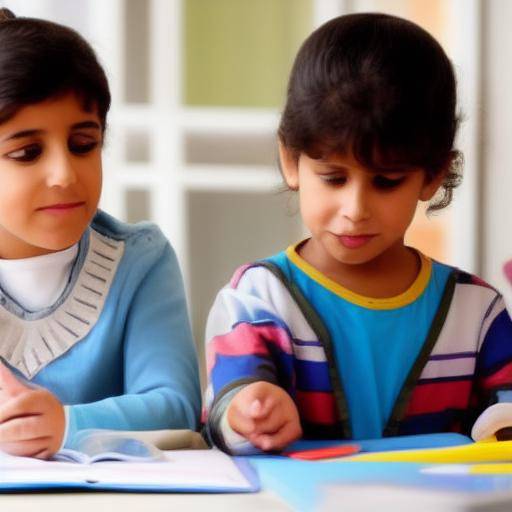
Value education is essential for the comprehensive development of children and adolescents. At home, parents play a crucial role in this task, as they are the main models to follow for their children. In this article, we will explore various strategies that parents can use to inculcate strong and lasting values in their children, thus promoting their personal growth, their social adaptation and their emotional well-being.
Introduction
When it comes to the development of values in children, the home is the first stage in which the bases are established. Education in values includes aspects such as empathy, respect, responsibility, solidarity, honesty and tolerance, among others. The implementation of effective strategies at home can have a significant impact on the ethical and moral formation of children. In this article, we will present a set of strategies and practical advice to promote education in values in the family environment.
History and background
Education in values is not a new concept, but has evolved throughout the history of humanity. From ancient civilizations to contemporary pedagogical currents, the transmission of values has been a fundamental pillar in the formation of new generations. Exploring the history and background of education in values allows us to understand its importance in the current context and its relevance to social welfare.
Origins and evolution
Education in values has deep historical roots, from the teachings of ancient Eastern philosophies to the ethical traditions of great Western cultures. The Greeks, for example, attached great importance to the integral formation of the individual, including moral and ethical aspects. On the other hand, in the religious sphere, many spiritual traditions have transmitted fundamental values over the centuries.
Relevant issues and developments
The twentieth century marked a turning point in education in values, with a renewed focus on the promotion of ethics, citizenship and social responsibility. The 1959 Declaration of the Rights of the Child and the 1989 Convention on the Rights of the Child were significant steps towards the protection of the rights of children and the promotion of their comprehensive development.
Detailed analysis
Education in values not only entails obvious benefits, but also challenges that need to be addressed effectively. We will analyze in depth the practical and theoretical implications of this educational approach, offering a complete vision of its impact on the formation of ethically responsible individuals.
Benefits and challenges
Education in values promotes the development of whole people, capable of living in harmony with their social environment. However, addressing sensitive issues such as morals, ethics and religion can pose challenges in a diverse and plural world. Understanding the benefits and challenges of education in values gives us a balanced perspective on its implementation.
Current trends and statistics
The evolution of society and family dynamics influence the way in which values are transmitted at home. Recent statistics reveal significant trends in parents ' perception of values education and its impact on children ' s development. Exploring these trends provides us with valuable information on current value training needs in the family environment.
Comprehensive review
Education in values is not limited to abstract theories, but requires concrete strategies for effective implementation at home. Examine in detail practical applications and best practices allows us to identify successful approaches that foster a culture of values within the family.
Best practices and case studies
Identifying best practices in value education provides us with practical tools to promote a family environment based on respect, empathy and responsibility. Based on actual case studies, we will analyze specific strategies that have proven to be effective in transmitting household values, providing inspiring examples for parents who wish to strengthen their children ' s ethical training.
Comparative analysis
It is essential to understand the differences and similarities between education in values, strategies implemented and their impact on the family. In exploring these differences, we can identify the most appropriate strategies to promote solid values at home, as well as the impact of various strategies on the development of children.
Practical advice and recommendations
Implementing effective strategies for household education requires a practical and action-oriented approach. We will provide practical advice and evidence-based recommendations to help parents strengthen their children ' s ethical training effectively and significantly.
Step-by-step guides and checklists
Providing step-by-step guides and checklists provides parents with concrete tools to implement household value education strategies. These practical tools will enable them to carry out specific activities that encourage the understanding and internalization of fundamental values in their children.
Industry perspectives and expert opinions
The perspectives of experts in psychology, pedagogy and child development enrich our understanding of education in values at home. We will present informed opinions and key expert advice on the subject, providing readers with a broader and deeper view of the most effective strategies to promote values in the family environment.
Case studies and practical applications
Case studies and practical applications provide concrete examples of how to implement household value education strategies. Through real experiences, we will explore successful cases of families who have managed to promote significant values in their children, extracting valuable lessons that can be applied in different family contexts.
Future trends and predictions
The future of education at home values presents challenges and opportunities as society evolves. We will explore emerging trends in the ethical formation of children, as well as the underlying predictions on the crucial role of education in values in the future development of new generations.
Conclusions and FAQs
Conclusions
In short, education in household values is a vital aspect of the development of children, with significant benefits at the individual and social levels. The strategies addressed in this article provide parents with the opportunity to strengthen their children ' s ethical formation, fostering solid values that will last throughout their lives.
FAQ (FAQs)
1. What are the most important values of inculcating children at home?
Fundamental values such as respect, honesty, empathy and responsibility are essential for the ethical training of children at home. Inculcating these values lays the foundation for their personal development and social integration.
2. How can I promote empathy in my children?
Fostering empathy in children requires offering them opportunities to understand the emotions of others, providing emotional support and modeling empathic behaviors in the family and social context.
3. What is the role of coherence in the transmission of values?
Consistency in the words and actions of parents is essential for the effective transmission of values at home. Children internalize values primarily through coherence between what is taught and what they observe in their parents' behavior.
4. How to deal with situations where values conflict with externity influence?
Sometimes instilled values in the home can conflict with external influences, such as social networks, the media or third-party opinions. It is essential to dialogue with children, provide them with tools to discern between different values and promote critical reflection.
5. How can I strengthen family communication in the context of education in values?
Open and respectful communication is a fundamental pillar in the transmission of values at home. Promoting active listening, respectful dialogue and expression of emotions strengthens the family bond and facilitates the inculcation of significant values.
6. Why is education in values important in the current context?
In a constantly changing world, education in household values becomes more relevant to form ethically responsible individuals, capable of facing social challenges with empathy, solidarity and respect for diversity.
Conclusion
Ultimately, household education is a continuous process that requires dedication, coherence and adaptation to the individual needs of children. By applying the strategies presented in this article and reflecting on the common questions addressed, parents can play a key role in the formation of ethically solid individuals capable of contributing positively to society.