Introduction
Music has been a powerful tool throughout history to improve learning, concentration and memory. Since ancient times, he has accompanied rituals, teachings and daily activities, demonstrating his positive influence on cognitive and emotional development. In this article, we will thoroughly explore the impact of music on the learning process, approaching from its historical background to future trends and predictions. In addition, we will present practical advice and expert views on the topic to maximize its usefulness in educational and daily contexts.
History and Background
The relationship between music and learning dates back to ancient civilizations. Mesopotamian, Egyptian, Greek and Roman cultures recognized the power of music in education and mental health.
Antiquity
In ancient Greece, music was considered an essential part of education, along with gymnastics and mathematics. Aristotle and Plato stressed the importance of music in the formation of the character and morality of individuals. This holistic approach to education has laid the foundation for contemporary understanding of music as a means of improving learning.
Renaissance and Baroque
During the Renaissance and the Baroque, music was used to stimulate concentration and creativity in academic and artistic environments. Composers like Johann Sebastian Bach and Wolfgang Amadeus Mozart created works with specific features to enhance cognitive capacity.
20th Century and News
The twentieth century marked the beginning of scientific research on the effects of music on learning. Advances in neuroscience have revealed that music activates various areas of the brain, stimulates the release of dopamine and strengthens neuronal connections, which contributes significantly to the learning process.
Analysis in Deep
Benefits of Music in Learning
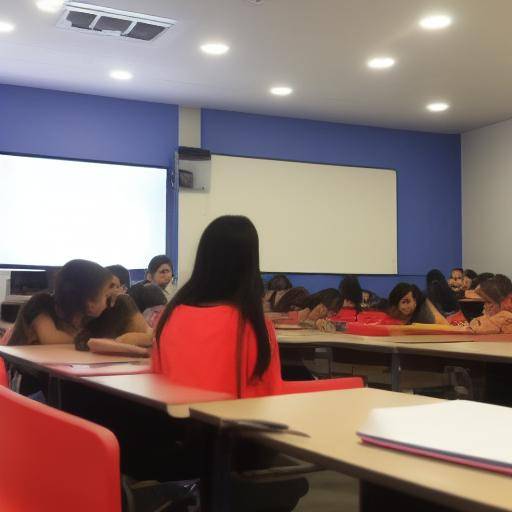
The use of music in educational settings offers many benefits. It helps to reduce stress, improve concentration, facilitate information retention and promote creativity. Studies show that music can influence the mood and generate an enabling environment for effective learning.
Challenges and Considerations
Despite the obvious benefits, there are challenges in incorporating music in educational settings. The proper selection of musical styles and the controlled volume are crucial aspects to consider, as inappropriate music can distract rather than focus.
Comprehensive review
Practices and Best Practices
The implementation of music in educational settings can vary from the use of classical music during study sessions to the creation of educational songs to reinforce concepts. Best practices include the adaptation of music to the content and age of students, as well as collaboration with professional musicians to enrich the experience.
Outlook of Experts
Educational and music experts confirm the relevance of music in learning. The renowned researcher in cognitive neuroscience, Dr. Daniel Levitin notes that music can function as a "brain training," strengthening fundamental cognitive skills.
Comparative analysis
In order to fully understand the impact of music on learning, it is crucial to compare and contrast different approaches. Music, as a tool to improve learning, exhibits fundamental similarities and differences with other teaching methods.
Practical Tips and Approaches
The effective implementation of music in learning requires careful planning. Some practical tips include the creation of specific playlists for different activities, the gradual introduction of music in educational environments and the constant assessment of their impact on academic performance. In addition, it is recommended to encourage the active participation of students in the selection and creation of music to support their learning process.
Conclusions
Music has a significant potential to improve learning in multiple contexts. Its ability to influence the concentration, mood and retention of information makes it a valuable tool in educational settings. By understanding and taking advantage of the benefits of music, educators and students can significantly enrich the teaching and learning experience.
Frequently asked questions
1. Does the music in the classroom negatively affect the concentration of students?
The influence of music in the concentration of students varies according to the type of music and individual preferences. Soft and lyricless music can improve concentration in some situations, while words music can be distracting.
2. Does music have lasting effects on learning?
Continuous exposure to music in educational environments can generate long-term effects, strengthening memory, creativity and cognitive skills.
3. Is there a specific musical genre that is considered more beneficial to learning?
While classical music has commonly been associated with cognitive benefits, individual preference and educational context are also determining factors in the effectiveness of music to improve learning.
4. Is it advisable to use music as part of the daily study routine at home?
Integrating music into the home study routine can offer significant benefits, as long as it is carefully selected and adapted to the individual environment and preferences.
5. Can music in educational environments be a distraction for some students?
Individual sensitivity to music varies, and some students can find it distracting. It is therefore important to allow the option to study in silent environments for those who prefer not to have music present.
6. How can educators effectively incorporate music into their teaching?
Educators can use music to introduce concepts, establish a positive learning environment and encourage the active participation of students in creating music relevant to their learning.
In conclusion, music offers a wide range of benefits to improve learning in educational settings. In understanding its impact, considering the challenges and applying best practices, it is possible to take full advantage of the potential of music as an integral tool to enrich the teaching and learning experience.
Explore and experiment with music in your learning process and unlock your maximum potential!