Introduction
Nature exerts a powerful influence on all aspects of our lives, including early learning. For centuries, the connection with nature has been essential to human development, and its impact on early learning has gained growing interest and attention in recent years.
In this article, we will explore the crucial role of nature in early learning, examining in detail its influence on the cognitive, emotional and physical development of children.
History and Background
The influence of nature in early learning has deep roots in the history of humanity. From ancient civilizations to contemporary theories of child development, the importance of nature has been recognized in various ways over time.
During the Renaissance, philosophers like Jean-Jacques Rousseau emphasized the importance of a natural environment for the healthy development of children, laying the foundations for modern pedagogical approaches that integrate the connection with nature in the educational process.
The outdoor education movement, which emerged in the late nineteenth century, promoted the idea that children benefit enormously from educational experiences in natural environments, a relevant notion to this day, supported by contemporary research that demonstrates the positive effects of nature on early learning.
Detailed Analysis
We will explore the scientific evidence that supports the benefits of exposure to nature in the cognitive and emotional development of children. Recent studies have shown that interaction with natural spaces promotes creativity, problem solving and emotional well-being. In addition, regular contact with nature has proven to reduce stress and anxiety in children, contributing to healthier emotional development.
We will also examine the contemporary challenges facing the integration of nature into early learning, in a world increasingly dominated by technology and urban environments, the disconnection of nature has become a global problem. We will discuss strategies to counter this trend, highlighting the importance of educational programmes that foster greater contact with natural environments.
Comprehensive review
Beyond cognitive and emotional aspects, the influence of nature on early learning has a significant impact on the physical health of children. We will talk about how outdoor activity promotes an active and healthy lifestyle, helping to prevent childhood obesity and other sedentary-related diseases. In addition, contact with nature fosters greater appreciation for the environment, laying the foundations for future generations of responsible and conscious citizens.
Comparative analysis
We will compare different pedagogical approaches that integrate nature into early learning, from kindergartens to educational programs based on observation and discovery in natural environments. By putting these practices in context with more traditional methods, we will highlight the advantages and challenges of each approach, providing a detailed overview of options available for parents and educators.
Practical Tips and Accessible Recommendations
We will offer practical advice to foster the connection with nature on the day to day of children. From outdoor activities to strategies to incorporate nature into the home and school, we will provide actionable recommendations supported by experts in child development and education.
Industry Perspectives and Expert Reviews
We will compile insights and opinions from experts in early education and child development, providing an integral view of the importance of nature in early learning. By highlighting the experiences of professionals who have implemented nature-based programs, readers will gain a deeper understanding of the tangible benefits that these approaches can offer.
Case Studies and Practical Applications
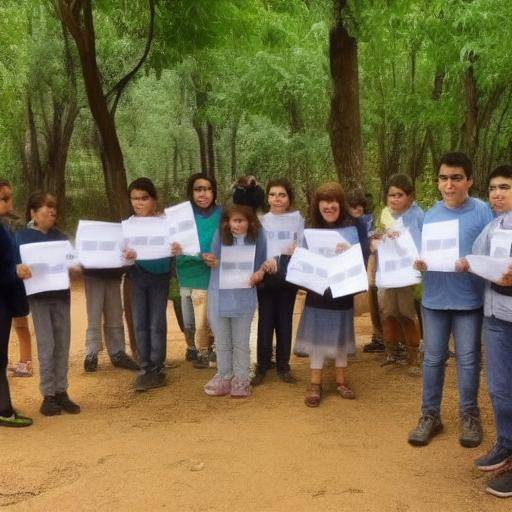
We will explore case studies that illustrate the effectiveness of educational programs that integrate nature into early learning. From rural schools to community initiatives in urban settings, we will analyze how nature has transformed the educational experience of children, providing concrete examples of their positive impact.
Future Trends and Predictions
Finally, we will immerse ourselves in emerging trends and predictions related to the integration of nature into early learning. With the growing awareness of the benefits of nature for child development and increasing concern for the well-being of children in urban settings, we will reflect on the future of early education in the context of nature.
Conclusion
In short, connection with nature plays a key role in early learning, influencing not only the cognitive and emotional development of children, but also their physical health and appreciation for the environment. By integrating nature into the educational environment in a meaningful way, we can cultivate generations of individuals more balanced, creative and aware of their environment.
FAQs
- Why is nature important in early learning? Nature enriches the early learning experience by promoting creativity, emotional well-being and appreciation for the natural environment, among other benefits.
- What are some practical strategies for integrating nature into early education? Outdoor activities, outdoor kindergartens, excursions to natural environments and the incorporation of natural elements into the classroom are some effective strategies.
- How does the lack of contact with nature affect the development of children? Lack of contact with nature can contribute to health problems, child stress and lower environmental appreciation, among other negative effects.
- What specific benefits does nature have for the cognitive development of children? Nature stimulates curiosity, promotes problem solving, fosters sensory exploration and awakens creativity in children.
- Are there significant differences in the development of children regularly exposed to nature compared to those who are not? Studies have shown that children regularly exposed to nature tend to show improvements in their physical health, emotional well-being and cognitive abilities compared to those with limited access to natural environments.
- What is the role of parents and educators in fostering the connection of children with nature?