Introduction
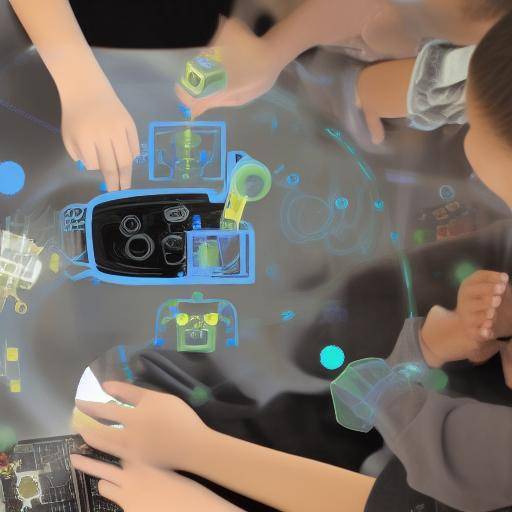
The increased reality (RA) has revolutionized the way we interact with the world around us. In the educational field, its applicability is becoming more and more relevant. This article will explore in detail the effective strategies to use the increased reality in the educational field, with the aim of maximizing their potential and enriching the learning experience of students. In addition, we will address its historical impact, its benefits, current challenges, applications, future trends and practical advice for implementation. Throughout this course, we will also present valuable views of experts, case studies and future predictions on the subject.
History and Background
Augmented reality is not a new concept. Over the decades, it has experienced significant development from its modest beginnings to its current prominence. In the 1960s, Morton Heilig introduced the first virtual reality viewer, laying the foundations for future exploration of the interaction between the real and the virtual world. This surprising advance paved the way for the evolution of the increased reality in the field of education.
The term "augmented reality" was officially coined by Tom Caudell in 1990, marking a key milestone in its evolution. Since then, the augmented reality has gone a long way, from its first implementations in the aerospace industry to its widespread adoption in education and beyond.
Analysis in Deep
Benefits of Enhanced Reality in Education
The implementation of augmented reality in educational settings offers many benefits. It favors the visualization of abstract concepts, facilitating the understanding of complex content. In addition, it promotes the participation and commitment of students by presenting experiences of immersive and playful learning. The interactivity and customization offered by the increased reality significantly improve knowledge retention.
Current Challenges and Trends in the Application of Enhanced Reality in Education
Despite its advantages, the implementation of the increased reality in the educational field presents challenges. The need for specialized equipment, the learning curve for educators and the effective integration with the curriculum are common obstacles. However, the trend towards the democratization of technology and the development of more accessible applications suggest a promising future.
Applications and Best Practices
The increased reality has found application in a variety of educational contexts, from teaching science and mathematics to simulation of historical and cultural environments. Best practices include the creation of attractive and relevant content, the proper training of educational staff and harmonious integration with the existing curriculum. In addressing these aspects, educational institutions can maximize the potential of increased reality as a learning tool.
Comparative analysis
The increased reality and closely linked educational strategies have a significant impact on the educational process. The integration of effective strategies of augmented reality in education can enhance the motivation and academic performance of students, compared to traditional teaching methods.
Practical Tips and Recommendations
Effective implementation of the increased reality in educational settings requires careful planning and implementation. Some recommendations include selecting relevant applications and resources, providing comprehensive training to educational staff and continually assessing the impact on the learning experience of students.
Perceptions of Industry and Expert Reviews
A look at the opinions of experts in the field of education reveals a general consensus on the transformative potential of the increased reality in the educational process. This technology is expected to continue to evolve and redefine the way students learn and interact with knowledge. In addition, the leaders of the education industry emphasize the need for an open mindset towards the integration of the increased reality, recognizing its ability to enrich learning and prepare students for an increasingly digitalized world.
Case Studies and Practical Applications
Real case studies offer a detailed view of how various educational institutions have successfully implemented the augmented reality. From the teaching of anatomy through 3D models to the exploration of historical event simulations, case studies illustrate the positive impact of the increased reality on the understanding and commitment of students.
Future Trends and Predictions
The increased reality is expected to continue its expansion in the educational field, leading to increased adoption and diversification of applications. The increased reality is expected to further transform education by providing immersive, personalized and collaborative experiences that will enrich the learning process.
Conclusions
The augmented reality presents an exciting opportunity to revolutionize education, offering a unique way of interacting with information and the educational environment. As this technology continues to evolve, it is crucial that educators and educational leaders actively explore their integration and maximize their potential to enrich students' educational experience. In doing so, they will be preparing future generations for a digitally advanced world.
Frequently asked questions
How can the increased reality enrich the teaching of sciences in the classroom?
The increased reality gives students the opportunity to visualize complex scientific concepts in a tangible and realistic way, which facilitates a deeper understanding. In addition, interactive simulations of scientific phenomena promote practical learning and scientific curiosity.
What are the main challenges in the implementation of the increased reality in educational settings?
The main challenges include the acquisition of appropriate hardware and software, the training of teachers to effectively integrate the increased reality into the curriculum, and the guarantee of equitable accessibility for all students, regardless of their resources.
What role do educational strategies play in the effectiveness of the increased reality in the classroom?
Strong educational strategies, such as the integration of augmented reality into collaborative learning activities or the design of interactive learning experiences, are key to maximizing the impact of augmented reality on the educational process.
Can augmented reality adapt to different learning styles?
Yes, the versatility of the increased reality allows its adaptation to various styles and learning rhythms. You can offer visual experiences for visual learners, interactive activities for cinematic students and practical simulations for hearing students.
How is the impact of the increased reality assessed on the learning experience of students?
The assessment of the impact of the increased reality on the educational experience includes the collection of quantitative and qualitative data on the commitment, understanding of the content and academic performance of students, as well as feedback from educators and students themselves.
Is the increased reality limited to certain subjects or can it be integrated into different academic disciplines?
Increased reality can be integrated into a wide range of academic disciplines, including science, mathematics, literature, history, art and more. Its versatility and ability to represent information visually and attractively make it a suitable tool for various areas of study.
In conclusion, the increased reality emerged as a powerful tool for education, offering an innovative and attractive approach to improving the learning experience of students. A strategic and reflective approach to its implementation can open up new possibilities for learning and educational development. In addition, the continuing evolution of the augmented reality promises an exciting future full of educational possibilities.