Introduction
The development of teamwork skills is essential for students from an early age. Evaluating teamwork performance is not only a measure of student progress, but also promotes the development of social skills, empathy and leadership. In this article, we will explore the importance of evaluating teamwork at school, offering practical advice and detailed analysis on this key issue in education.
History and Background
The concept of teamwork has deep roots in the history of education. From ancient civilizations to today, collaboration has been fundamental in the educational process. In ancient Greece, for example, the idea of "paideia" involved the integral formation of citizens, including the development of collaborative skills.
The importance of teamwork in education was reinforced during the Industrial Revolution, when the need for workers with collaborative and communicative skills became evident. Since then, education has increasingly included team-based activities, recognizing their value in preparing students for the world of work.
Analysis in Deep
Evaluating teamwork at school has significant benefits. Beyond measuring individual performance, the assessment of teamwork promotes cooperation, respect and conflict resolution. The challenges of evaluating teamwork are the difficulty of measuring individual contributions and ensuring that all team members participate equitably.
Comprehensive review
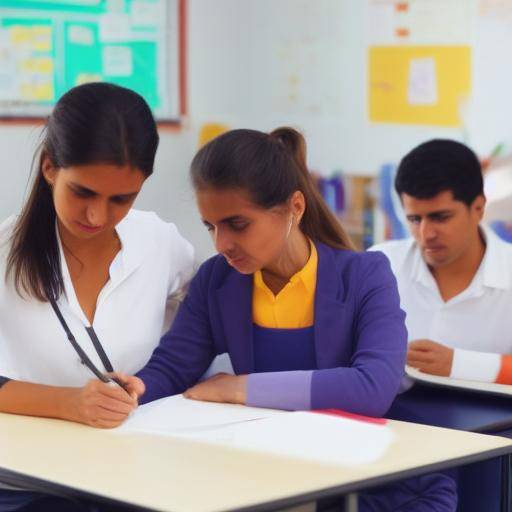
The applications of teamwork assessment vary widely, from group projects to extracurricular activities. The mixed self-assessment and peer assessment approach, in which students analyze both their own performance and that of their peers, can provide a more comprehensive view of teamwork.
Comparative analysis
Compare the evaluation of teamwork in different educational environments shows significant similarities and differences. While in some cases the evaluation focuses on the final product, others highly value the process of collaboration and communication among students.
Practical Tips and Accessible Tips
Some practical tips for evaluating teamwork at school include establishing clear evaluation criteria, fostering constructive feedback among team members and providing opportunities for individual and group reflection on teamwork.
Industry and Expert Reviews
Pedagogy experts highlight the importance of the training evaluation of teamwork, which not only focuses on the final qualification, but on the continuous learning and development of social and emotional skills in students.
Case Studies and Practical Applications
An example of successful application of teamwork evaluation at school is the use of rubrics that clearly set the evaluation criteria and provide students with a transparent guide for expected performance.
Future Trends and Predictions
As education increasingly emphasizes the development of socio-emotional skills, the evaluation of teamwork is expected to evolve into a more holistic approach than measures both results and the collaborative process.
Conclusion
In short, the evaluation of teamwork at school is an invaluable tool for fostering social, communicative and leadership skills in students. By implementing effective evaluation practices, schools can prepare students to face real-world challenges and foster a collaborative and respectful environment.