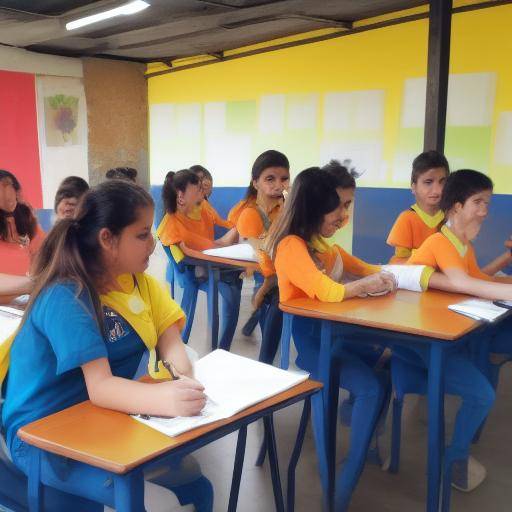
Experiential learning is a pedagogical methodology that has acquired great relevance in the educational field. Through direct experience and reflection, individuals acquire knowledge, skills and attitudes. In this article, we will explore in depth the meaning, evolution, benefits and challenges of experiential learning in the context of education. We will also analyze your role in comprehensive student training, comparing it with other educational methodologies, and present future predictions and practical advice.
Introduction
Experiential learning is much more than learning through practice; it is a way of learning that involves the integral development of students. This methodology allows them to participate actively in their own training process, fostering reflection, problem solving and self-directed learning. As we enter this subject, we will understand how experience learning has evolved over time and its position in the contemporary educational context.
History and Background
Experiential learning has deep roots in the history of education. Since ancient times, Greek philosophers like Socrates and Aristotle promoted the idea of learning through experience and dialogue. However, it was in the twentieth century when this methodology took concrete form. John Dewey, an influential American pedagogue, contributed significantly to the development of experiential learning by advocating an education focused on experience and interaction with the environment.
Throughout the twentieth century, experiential learning was adopted by various pedagogical trends, consolidating itself as a fundamental approach to education. The movement of progressive education, the constructivist theories of Piaget and Vygotsky, as well as cooperative learning practices, have helped to enrich and consolidate experiential learning as a pillar of contemporary education.
Analysis in Deep
Experiential learning provides many benefits to students, such as the development of soft skills, the promotion of intrinsic motivation and the improvement of knowledge retention. On the other hand, it faces challenges related to learning assessment, the need for an enabling environment for experience and coordination with traditional curricula.
At present, experiential learning has become a relevant global educational trend. Various academic institutions and organizations have adopted experience-based approaches, such as service learning, boarding and internship programmes, live laboratories, research projects and problem-based learning.
Comprehensive review
Experiential learning, within the educational sphere, is presented as a powerful tool for the development of skills that go beyond theoretical knowledge. Its impact extends to the promotion of creativity, critical thinking, problem solving and teamwork. However, their integration with other methodologies and their adaptation to different educational contexts require thorough analysis.
It is essential to examine best practices of experiential learning and their application in diverse educational settings, from formal education in schools and universities to vocational training and lifelong learning. This evaluation will consider successful experiences, lessons learned and recommendations to maximize the potential of experiential learning in education.
Comparative analysis
By comparing experiential learning with other educational approaches, such as traditional memoristic learning and knowledge-based education, clear differences are evident. While experiential learning focuses on direct experience and reflection, traditional education tends to focus on memorizing information. The role of experiential learning in education is fundamental, as it promotes the practical application of knowledge and skills. Through comparative examples and real cases, it will be highlighted how experiential learning can complement and enrich academic training, preparing students to face real-world challenges.
Practical Tips and Recommendations
To successfully incorporate experiential learning into educational environments, it is crucial to design meaningful and relevant experiences, encourage critical reflection by students, and provide constructive feedback spaces. In addition, the integration of educational technologies and collaboration with the community can enhance the impact of experiential learning on education.
Conclusions
Experiential learning is a key element in transforming educational models into more comprehensive and effective approaches. Through reflection, action and connection with the real world, students can significantly expand their skills and competencies, preparing to face the challenges of a constantly changing society.
FAQs
1. What are the main features of experiential learning?
Experiential learning is characterized by the focus on direct experience, critical reflection, self-directed learning and practical application of knowledge.
2. What benefits does experiential learning bring to students?
This educational approach promotes the development of soft skills, intrinsic motivation, the retention of long-term knowledge and the preparation to face real-world challenges.
3. What is the role of the teacher in experiential learning?
The teacher plays a role as facilitator and guide in the process of experiential learning, creating meaningful experiences, fostering reflection and providing constructive feedback.
4. How is experiential learning evaluated?
The evaluation of experiential learning may include direct observation, review of products or projects by students, and reflexive self-assessment.
5. Is it possible to integrate experiential learning into different areas of knowledge?
Yes, experiential learning can be applied in various fields of knowledge, from natural and social sciences, to arts, sports and entrepreneurship.
6. What impact does experiential learning have on the professional development of students?
Experiential learning prepares students to face employment situations and professional challenges, developing transferable skills and competencies to working contexts.
With this information, it is clear the relevance of experiential learning in education and its potential to enrich the training process of students, preparing them for a future full of challenges and opportunities.