Rotary leadership in teamwork is an innovative practice that is gaining popularity in working environments promoting collaboration, skills development and operational efficiency. In this article, we will explore in depth the role of rotating leadership in the context of teamwork, from its origins to future trends and forecasts.
Introduction
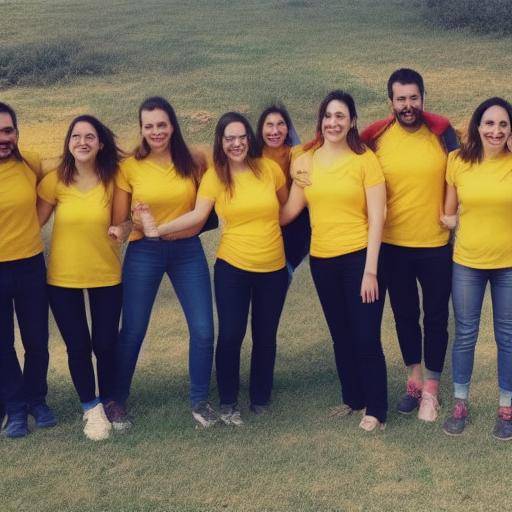
Team leadership is a fundamental pillar in any working environment, as it directly influences productivity, job satisfaction and group cohesion. In this sense, rotating leadership offers a dynamic and open approach, allowing multiple team members to assume leadership roles at different times and situations. This system promotes active participation, equity and the development of leadership skills among team members.
Throughout this article, we will explore the origin and evolution of rotating leadership, analyze in depth its benefits and challenges, compare this approach to other forms of leadership, and offer practical advice to successfully implement rotating leadership in work teams.
History and Background
The concept of rotating leadership has its roots in the philosophy of participatory management and the theory of situational leadership. Its background dates back to the practices of rotation of roles and responsibilities in traditional communities and organizations, where the equitable distribution of leadership was considered essential for collective well-being.
During the twentieth century, theorists and thinkers of organizational management began to explore more deeply the idea of sharing leadership, recognizing that a more distributed and collaborative approach could have a positive impact on efficiency and innovation. This approach was strengthened by the growing appreciation of diversity, inclusion and democratization in modern working environments.
Analysis in Deep
By implementing rotating leadership in work teams, it is essential to consider both their advantages and their challenges. In terms of benefits, this approach promotes the equity and active participation of all team members, which in turn can stimulate creativity, problem solving and commitment to shared goals.
However, rotating leadership also poses challenges related to effective leadership coordination, coherence and development. It is crucial to establish a clear and transparent framework for role rotation, as well as to provide support and training to team members who assume leadership responsibilities at specific times.
Comparative analysis
By comparing rotational leadership with other leadership models, such as hierarchical leadership or shared leadership, it is possible to identify different strengths and weaknesses. While hierarchical leadership can provide clear leadership and efficient decision-making, rotating leadership can enhance diversity of perspectives, adaptability and autonomy.
Practical Tips and Recommendations
Successful implementation of rotational leadership requires careful planning and communication. It is essential to establish an equitable and transparent rotation system, provide opportunities for leadership skills development, and foster a culture of mutual support and continuous learning. In addition, it is advisable to monitor closely the impact of this leadership modality and make adjustments as necessary.
Conclusion and Frequently Asked Questions
In short, rotating leadership in teamwork represents an innovative and effective alternative to promote participation, equity and leadership skills development. In understanding their role and implications, organizations can foster more collaborative, dynamic and resilient working environments.
Frequently asked questions about rotating leadership in teamwork
- **What is the role of the leader in a rotating leadership approach?**The leader in a rotating leadership approach acts as a facilitator and catalyst for the potential of team members. Its main role is to create an enabling environment for the equitable rotation of leadership responsibilities, support and guidance, and to foster the development of leadership skills among all team members.
- **How are leadership responsibilities distributed in a rotating leadership team?**Leadership responsibilities are distributed in an equitable and rotating manner among team members, so that each person has the opportunity to assume leadership roles in different contexts. This rotation can follow a preset schedule or adapt to the specific needs and challenges of the equipment and the project in question.
- **What are the main advantages of rotating leadership compared to other leadership models?**Rotary leadership offers significant advantages, including the promotion of diversity of perspectives, equitable development of leadership skills, improved collaboration and the creation of a more inclusive and participatory working environment. In addition, this approach can enhance creativity and innovation by fostering the exploration of different styles of leadership.
- **What challenges can arise when implementing rotating leadership in a team?**In implementing rotating leadership, it is common to face challenges related to coordination, consistency in decision-making and identification of emerging leaders. It is important to be aware of the need to provide training and support to team members who assume leadership roles, as well as to establish effective mechanisms to ensure coherence and quality in the implementation of leadership tasks.
- **How can the impact of rotational leadership on productivity and job satisfaction be measured?**The impact of rotating leadership can be measured through indicators such as the active participation of team members in decision-making, the development of leadership skills over time, the perception of equity and growth opportunities, and the effectiveness in problem solving and the achievement of joint goals.
- **What are the best practices to successfully implement rotating leadership in an organization?**To successfully implement rotating leadership, it is crucial to establish a clear framework for leadership responsibilities rotation, provide training and skills development, promote a culture of feedback and learning, and build trust and collaboration among team members. It is also essential to maintain open and transparent communication at all times.
In short, rotating leadership in teamwork represents a significant evolution in the way leadership is conceived and exercised. By promoting the equitable distribution of leadership roles and skills development among all team members, this approach contributes to building more inclusive, dynamic and effective working environments. By understanding their role and considering best practices for implementation, organizations can enhance the potential of their teams and achieve higher levels of collaboration and performance.