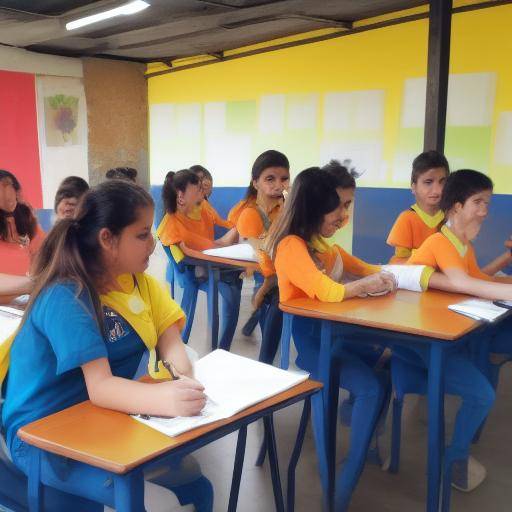
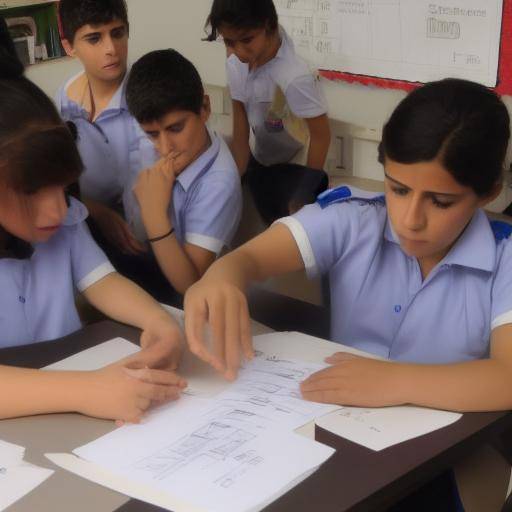
Simulations have come to revolutionize education, offering a powerful and dynamic tool for learning. In this article, we will explore in detail the impact, evolution, applications and future of simulations in the educational field. From its history to future trends, we will discover how simulations are transforming the way we learn and teach.
Introduction
The world of education is experiencing significant changes with the integration of innovative technologies, and simulations are prominent in this transformation. As educational institutions seek more effective methods to involve students and facilitate active learning, simulations have emerged as an invaluable tool. In this article, we will thoroughly explore the role of simulations in education, from its emergence to its current and future impact.
History and Background
Simulations in the educational field have their roots in the 1920s, when technology began to play an important role in military training and training in complex skills. The development of flight simulators and other specialized applications marked the beginning of an evolution that would extend to multiple educational fields.
In the 1980s, with the advance of computing and graphic technology, simulations expanded to areas such as medicine, engineering and business management. The ability to recreate realistic scenarios and provide immersive learning environments opened up new possibilities for education.
This progress continued over the following decades, with the evolution of virtual reality and the augmented reality, which allowed greater interactivity and personalization in educational simulations. Currently, simulations are used in a variety of disciplines, from training in technical skills to clinical practice in medical environments.
Analysis in Deep
The use of simulations in education offers many benefits, including the ability to provide practical experiences in a controlled environment, improve knowledge retention and promote critical skills development. In addition, simulations can be adapted to meet the individual needs of students, making them highly effective in custom learning environments.
However, there are challenges associated with the implementation of simulations, such as the need for adequate technological resources, integration with the existing curriculum and effectiveness evaluation. In addition, the creation and maintenance of high quality simulations requires significant time and effort investment.
Exhaustive examination
Simulations in education are applied in a variety of contexts, from teaching abstract concepts to training in practical skills. For example, in the field of science, simulations allow students to explore natural phenomena and experiment with complex theories that otherwise would be difficult to understand.
In areas such as medicine, simulations are fundamental to the training of health professionals, as they provide a safe environment for surgical procedures and clinical decisions. Similarly, in the business industry, management simulations offer students the opportunity to face real-world challenges and develop decision-making skills.
Comparative analysis
By comparing simulations with other traditional educational methods, it is clear that simulations offer a more immersive and practical learning experience. While lectures and readings can provide theoretical information, simulations actively involve students and challenge them to apply their knowledge in realistic environments.
In contrast to text or conference-based learning, simulations foster critical thinking, problem solving and decision-making, fundamental skills for real-world success. At the same time, simulations allow educators to evaluate the performance of students and provide immediate feedback, which contributes to more effective learning.
Practical Tips and Accessible Tips
If you are considering the implementation of simulations in your educational environment, here are some practical tips to maximize their effectiveness:
- Clearly identify the learning goals you want to achieve with simulations.
- Select or develop simulations that are relevant and meaningful to students.
- It effectively integrates simulations into the existing curriculum to ensure coherence and relevance.
- It provides guidance and support resources to enable students to make the most of simulations.
By following these tips, you can ensure that simulations become a valuable tool to involve students and improve their understanding and retention of the material.
Industry Perspectives and Expert Reviews
Education experts agree that simulations have the potential to transform the learning process by providing immersive and practical experiences. In addition, the ability to adapt simulations to the individual needs of students makes them an effective tool to promote participation and active learning.
Cases of Study and Applications in Real Life
Many studies have demonstrated the positive impact of simulations on education. For example, a study conducted in a medical school showed that students who participated in clinical case simulations significantly improved their ability to diagnose and treat diseases compared to those who followed traditional learning methods.
In addition, simulations are used in corporate environments to train employees in realistic business situations, which has proven to increase the effectiveness and retention of knowledge compared to more passive learning approaches.
Future Trends and Predictions
As technology continues to advance, simulations in education are expected to evolve to offer even more immersive and personalized experiences. The integration of artificial intelligence and data analysis into simulations will allow the dynamic adaptation of content to meet the specific needs of each student.
In addition, simulations are expected to play an important role in expanding online and distance learning, giving students the opportunity to participate in practical experiences from any location.
Conclusion and Frequently Asked Questions
In short, simulations play a crucial role in the transformation of the educational landscape, offering unprecedented opportunities for active and practical learning. As educational institutions continue to adopt this innovative technology, it is clear that simulations will continue to influence the way we teach and learn in the future.
Frequently asked questions
1. What are the key benefits of simulations in education?
Simulations offer an immersive learning experience, promote practical and critical skills, enable learning customization and provide immediate feedback, among other benefits.
2. How can I integrate simulations into my existing curriculum?
It is important to clearly identify learning objectives and select relevant simulations to support these objectives. In addition, working in collaboration with colleagues and professionals in educational technology can be beneficial to ensure effective integration.
3. What are the challenges associated with the use of simulations in education?
Some challenges include the need for adequate technological resources, integration with the curriculum, and evaluation of the effectiveness and impact of simulations on learning.
4. What areas of education are simulations commonly used?
Simulations are used in disciplines such as medicine, science, engineering, business management, technical training and many other areas where practical learning and specialized skills are required.
5. How can simulations help students face real-world challenges?
By offering realistic environments to practice and make decisions, simulations prepare students to apply their knowledge and skills in real situations, providing them with confidence and competence.
6. What is the future of simulations in education?
Simulations are expected to continue to evolve, offering more personalized and adaptive experiences, expanding online and distance learning, and playing an important role in training professionals in various fields.
With these frequently asked questions, we hope to have provided an integral vision of the simulations in education and their impact on the current and future educational landscape.
In conclusion, simulations are revolutionizing education by offering highly immersive learning experiences and practices. With its ability to adapt to the individual needs of students and provide immediate feedback, simulations have become an invaluable tool to involve and train students in a wide range of disciplines. As technology continues to advance, simulations are expected to evolve to provide even more personalized and effective experiences in the future, consolidating its position as a fundamental pillar in the teaching and learning process.