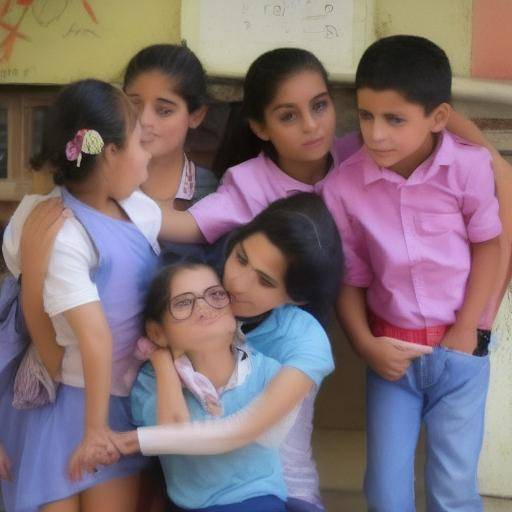

Humor has played a fundamental role in family dynamics throughout history, enriching interpersonal relationships, strengthening affective ties and providing a means to cope with adverse situations with a lighter perspective. In this article, we will explore the impact of humor on family dynamics, from its origins to its relevance in today's society. We will discover how humor can foster communication, promote resilience and create a more positive and healthy family environment.
Introduction
Humor is an essential facet of human experience and its influence is not limited to the individual sphere, but extends to interactions in the family sphere. The ability to laugh, to find comical situations in the day to day, and to share moments of joy contribute significantly to forging a harmonious and affectionate family dynamic. Throughout this article, we will explore in detail how humor plays a crucial role in family dynamics, from its historical evolution to its contemporary implications.
History and Background
The role of humor in family dynamics has deep roots that go back to ancient civilizations, where entertainment and comedy were central elements in everyday interactions. From the festivities in ancient Greece to theatrical performances in medieval Europe, humor has been a tool to foster family and community union. Throughout history, humor has evolved in parallel with social and cultural changes, adapting to the different circumstances and challenges that families have faced.
Family humor has been an escape valve in front of periods of difficulty, connecting generations through shared laughter and providing relief in moments of tension. Examine this historical context allows us to understand the lasting impact of humor on family dynamics, as well as its ability to strengthen emotional ties over time.
Detailed Analysis
The mood in family dynamics offers a wide range of benefits, ranging from improved communication to stress reduction. Scientific studies have shown that laughter released during moments of humor contributes to the release of endorphins, thus promoting a more relaxed and positive family environment. In addition, humor can serve as an effective coping mechanism in difficult situations, allowing families to overcome challenges with a more optimistic and resilient attitude.
However, it is crucial to recognize that humor in family dynamics also poses challenges, as the misunderstanding of the sense of humor or the inappropriate use of it can generate conflicts. Individual perception of humor can vary widely, which requires understanding and sensitivity from family members to ensure that humor is used in an inclusive and respectful manner.
Comprehensive review
The use of humor in family dynamics can take various forms, including the narrative of comic anecdotes, participation in joint play activities and the promotion of an atmosphere of openness and spontaneity. Conscious incorporation of humor as an integral part of family interactions can cultivate a welcoming and stimulating environment, facilitating the expression of emotions and strengthening family cohesion.
Experts in the field of family psychology point out that humor can play a fundamental role in building a shared sense of family identity, thus fostering a sense of belonging and connection between its members. By encouraging the creation of shared memories and promoting a playful approach to everyday challenges, humor contributes greatly to the construction of a family dynamic rooted in joy and camaraderie.
Comparative analysis
By comparing the use of humor in family dynamics with its relevance in other areas, such as the labor or social sphere, we can appreciate both similarities and significant differences. While humor in the working environment can focus on relieving tension and promoting team cohesion, in the family context, humor serves to strengthen emotional ties, foster creativity and transmit values. However, both in family dynamics and in other areas, humor plays a crucial role in stress management and in creating an emotionally enriching environment.
The effect of humour on family dynamics varies according to cultures and family traditions, which highlights the importance of understanding the specific context in which humor is used within each family nucleus. Although the way humor is manifested can vary, its positive impact on family cohesion and communication is universal.
Practical Tips and Accessible Tips
While the use of humor in family dynamics can naturally arise, there are practical strategies that can foster their effective integration. Some recommendations include devoting time to share playful moments in the family, fostering active participation in humorous activities and fostering openness for the exchange of jokes and anecdotes among family members.
It is essential to strike a balance between humor and sensitivity, making sure that the humor employed is inclusive, respectful and non-offensive. In addition, fostering an environment where humor is valued and celebrated can contribute to the creation of meaningful and lasting family memories, thus enriching family dynamics as a whole.
Industry Perspectives and Expert Reviews
The opinions of experts in family psychology and interpersonal relationships agree that the proper use of humor in family dynamics can significantly strengthen emotional ties and promote healthy communication. Mental health professionals emphasize the importance of integrating humor as a therapeutic tool in the upbringing of children, noting that the family environment enriched with humorous elements tends to foster resilience and psychological well-being in children and adolescents.
Sociologists also emphasize the role of humor in the transmission of traditions and family values, highlighting their ability to strengthen the collective identity of a family. The perspectives of industry and the opinions of experts reveal the profound and multifaceted impact of humor on family dynamics, highlighting its positive influence on various aspects of the emotional and relational development of its members.
Case Studies and Real Life Applications
The successful implementation of humor in family dynamics is reflected in numerous case studies that highlight its beneficial effects on the cohesion, happiness and general well-being of family members. The testimonies of parents, children and couples reveal that humor has played a crucial role in creating a family environment full of joy, complicity and love.
The practical applications of family humor are manifested in various situations, from conflict resolution and the promotion of open communication to the promotion of empathy and solidarity among family members. These real cases show how humor can be an invaluable resource to strengthen emotional ties and foster a harmonious and enriching family climate.
Future Trends and Predictions
As society evolves, it is foreseeable that the role of humor in family dynamics acquires greater relevance, especially in the context of increasingly dizzying and demanding lifestyles. Families are expected to recognize and value even more the importance of cultivating a mood enriched with humor, recognizing their ability to promote emotional well-being and strengthen emotional ties.
The creative use of technology, such as the creation of family memes or the participation in online humor challenges, can become an innovative way of fostering humor in family dynamics. Likewise, the development of educational programs and resources that promote the healthy use of humor in parenting and family coexistence could gain greater attention and relevance in the years to come.
Conclusion
In conclusion, humor plays an integral role in family dynamics, enriching daily interactions, strengthening emotional ties and promoting a positive and healthy family environment. From its historical roots to its contemporary influence, humor has proven to be an invaluable resource to foster joy, complicity and resilience within families.
It is crucial to recognize and celebrate the value of humor in family dynamics, fostering their conscious inclusion and their contribution to the quality of family life. By adopting a humor-enriched perspective, families can cultivate an emotionally enriching environment, thereby strengthening emotional ties and promoting the overall well-being of their members.
Frequently asked questions
What is the impact of humor on family dynamics?
The mood in family dynamics can have a significant impact, strengthening emotional ties, fostering positive communication and promoting resilience to challenges.
How can you encourage healthy use of humor in family dynamics?
Promoting openness to sharing humorous moments, promoting an environment of respect and sensitivity, and cultivating creativity in the way of expressing humor are key strategies.
How to address individual differences in the sense of humor within family dynamics?
Recognizing and respecting individual differences in the sense of humor is fundamental. Promoting open communication and mutual understanding can help to manage these differences constructively.
Is there any risk associated with the use of humor in family dynamics?
Although humor can be beneficial, it is important to avoid the use of jokes or comments that may be offensive or excluding. Sensitivity and respect are fundamental in the use of humor in family dynamics.
Can humor be an effective tool to address family conflicts?
Yes, humor can serve as an effective coping mechanism in resolving family conflicts, promoting open communication and reducing tension.
How does humor impact the emotional development of children within the family dynamic?
Humor can contribute positively to the emotional development of children, fostering creativity, strengthening self-esteem and promoting a welcoming and positive family environment.
In short, humor plays a crucial role in family dynamics, enriching relationships, promoting emotional well-being and fostering a positive and healthy family environment. By understanding and assessing the impact of humor in the family context, families can enhance their dynamics and strengthen their emotional ties.
Let us ensure that humor, used with sensitivity and respect, remains a valuable tool to promote joy and complicity within our families.